Dot to Dot Math
"Questions! There were always an endless series of questions in math class. The Teacher would ask: What is the circumference of this circle? Now, what is the area of that circle? Questions would go on and on. It was almost like I was on a hamster wheel running on forever
I never realized that what teachers asks their students can make a difference. Pam Harris, a Math Educator, wrote a blog at https://www.mathisfigureoutable.com/blog/QuestioningQuestioning
She talks about teachers asking funneling vs focusing questions. A funnel question is a set of questions that lead the student to a certain way of doing the math problem. On the other hand, a focusing questions listens to how the student responds to the previous question and then the teacher’s next question changes based on the student’s response.
Funnel questioning is something I saw as student. Math was taught by a sequence of steps that had to be followed. A teacher could reinforce a math process just by the questions they asked. This method works for some students. But other students, like myself, struggled to become engaged in this style of math learning.
Pam Harris then talks about focusing questions. In focusing questions, the teacher takes into account what a certain student already knows and the teacher asks questions based on the students knowledge. Pam says “The premise here is that the student has some prior understanding to build off of, they just haven’t connected enough of the dots to make the leap with this particular problem yet
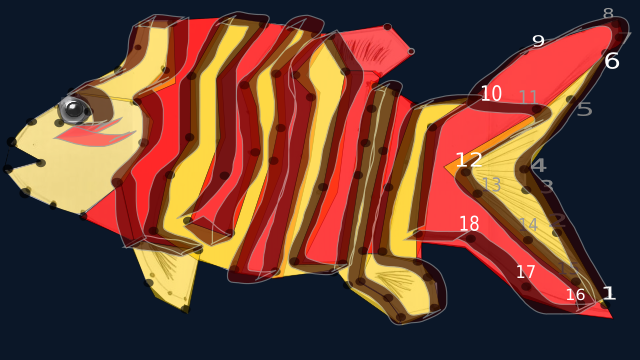
I like this idea that learning is about connecting dots. It is just like the dot to dot pictures we did in elementary school. When all the dots are connected, a beautiful picture forms. At first the dots seem random and un-patterned but, when the dots are connected correctly, the picture forms.
The Teacher helps connect the Dots by asking focusing questions based on the student’s individual needs. This may mean the Teacher directs the student to connect dots 7, 8 and 9 before 1 , 2 and 3. And yet, if this is what a student needs, this is right course of action. This leads the student to connect math concepts (the dots) together. Then after time, the student starts to really see the picture of that math concept
This is a beautiful picture of mathematics and it all started from a series of what appeared to be un-patterned dots. The real secret of math is that things that seem unrelated, unordered and random REALLY are connected and ordered. Math shows us the patterns in our world
Now, I feel like doing a dot to dot art picture
Karen Shaw---President of Karowin Zap Games
Karowin Pop Pop Math is available!
Why play the Game?
Designed for kindergarten through 5th grade, this game gives children the opportunity to explore number patterns BEYOND the basics. It covers the following number patterns: prime, fibonacci, squares, triangle, and cubic number patterns. The game, also, covers multiples of 3, 5, 6 and 7.
Math patterns are like word phonics for reading. When a child learns a number pattern, their ability to recognize and do math problems increases. When a number pattern becomes second nature to a child, they are more likely to understand and like mathematics. Gaining math fluency is beneficial for short-term and long-term mathematics growth.
This game is on Google Play. Did I mention it is currently free? Yes, free. Try it out today!
Karen Shaw---President of Karowin Zap Games

Karowin Zap's first game: It is coming.!
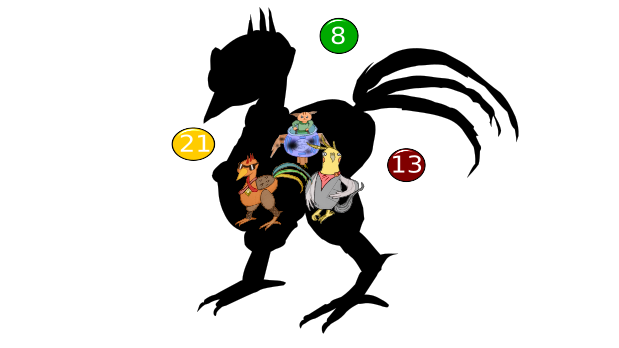
2024 came and left. As with any great journey, there were some unexpected twists and delays. Our first mobile app game had some delays. No worries, the game is still coming out. 2025 is the year!
Karen Shaw---President of Karowin Zap Games
What if the Fibonacci sequence and
Prime numbers were familar to me?
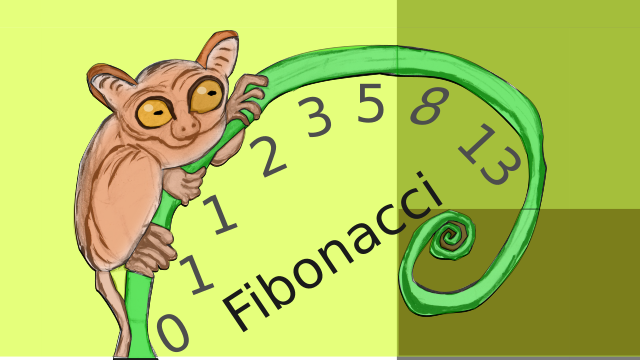
Years ago, I opened a college calculus book. I had studied calculus previously, but it was a long time ago. I gazed at the pages and I saw the symbols scattered across the page. I had forgotten what many of the symbols meant. It looked like a foreign language to me, and I wished that I could remember what they meant.
During my school years, I played education games like Lemonade Stand, Oregon Trail, and Word Munchers. Those interactive games, helped me understand about supply and demand, history of those who traveled to the West and word associations. Those games led to opportunities for learning.
This isn't a new concept. There are countless games available today that teach. I respect those game creators. They built great learning opportunities for students. I'd like join with this group of amazing people and expand those opportunities for students to learn mathematics. I love the idea of teaching with character-driven stories that helps students explore the wider world of mathematics knowledge.
This website went live in July of 2024 and our team started the journey of creating our first game two and half years ago. The release date is planned for early fall of 2024. As the release date draws near, I reflect on the jounery.
Every journey has a beginning, and this is ours. I'm excited for the future. We are never too young or too old to learn. Learning is the fantastic journey of exploring our world. Now what is a calculus derivative again? I better get back to learning....
Karen Shaw---President of Karowin Zap Games
